
Some time ago, the public was once again surprised by Minister Purbaya’s announcement about the government’s plan to redenominate the rupiah. Many people panicked, imagining their Rp100 million savings would suddenly shrink to Rp100,000. However, before rushing to protest to the bank, it’s important to understand that redenomination is not the same as sanering.
 Sources: Tribunnews.com
Sanering means cutting the value of money, which directly reduces people’s wealth. Redenomination, on the other hand, is merely simplifying the currency’s redenomination without affecting purchasing power. For example, if a cup of coffee currently costs Rp20,000, after redenomination it would simply be Rp20. The value remains the same, only the zeros are removed.
According to Bank Indonesia, the main goals of this policy are to improve economic efficiency and strengthen the rupiah’s image on the global stage. With fewer zeros, transactions, bookkeeping, and banking processes become faster and more efficient. Moreover, a currency with shorter denominations tends to be perceived as more stable, as long numbers are often associated with inflation and economic instability.
However, this seemingly simple policy carries a long history and valuable lessons. Indonesia once attempted a similar measure in 1965. At that time, the government announced redenomination and sanering amid extreme inflation exceeding 500 percent per year. The result was chaos. Confusion among the public, soaring prices, and ultimately, the policy’s failure. That experience underscored one critical point, which is that redenomination cannot succeed in an unstable economy or without clear public communication.
As this discourse reemerges today, many economists urge the government to proceed with caution. Redenomination can indeed bring benefits, such as financial system efficiency and symbolizing economic reform. But if it is carried out without preparation, it risks triggering panic. Miscommunication may lead the public to believe that their money has lost value, a psychological effect that contributed to economic crises in Venezuela and Zimbabwe, where uncontrolled redenomination led to hyperinflation.
Sources: Kompas.com
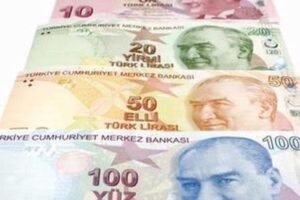
In contrast, Turkey offers a success story. In 2005, the Turkish government removed six zeros from its Lira after ensuring economic stability, low inflation, and strong public confidence. The transition was gradual and accompanied by massive socialization to prevent confusion. As a result, the new Turkish Lira strengthened both the economy and national pride.
The real question is, is Indonesia in the same position? The rupiah remains volatile, basic goods are not yet price-stable, and public trust in economic policy continues to fluctuate. Under these circumstances, redenomination may be too ambitious or even premature.
Furthermore, today’s public is far more sensitive to economic policy. People demand transparency and tangible results, not merely slogans of “modernization.” Thus, the psychological aspect becomes a big gamble: it is not only about technical clarity, but also about trust in policymakers.
This is where redenomination becomes more than just an economic project. It becomes a mirror between the good intentions of reform and the need for political image-building. This is because, in economic history, policies that touch on national symbols such as currency are often used as a tool to restore public confidence in difficult times.
Yet, trust cannot be printed alongside new money. It must be earned through consistency, honesty, and open communication. If the government truly wants redenomination to succeed, the focus should not just be on removing three zeros from the rupiah, but on removing the distance between policy and the people.
We can certainly be optimistic. Perhaps redenomination can be a new milestone for building economic efficiency and trust in the rupiah. But optimism without preparation is a recurring mistake. Therefore, before deciding to change the face of money, it may be more important to ensure that the economic foundation is solid and public trust is no longer fragile.
Because ultimately, the true value of a currency is not defined by the number of zeros printed on it, but by how much the people trust the government that issues it. (ANF/SZA)